A gentle reputation
Many Cochins are notably relaxed and approachable. Good handling helps, but each bird still has an individual personality.

Breezy Bird Farms · Heritage chickens
Feathered feet. Rounded charm. Gentle presence.
There is nothing quite like a Cochin: a remarkably full, soft-feathered bird with an easygoing reputation and a long history in heritage poultry. At Breezy Bird Farms, our Cochins belong to one Blue / Black / Splash breeding group—three possible colour expressions within the same breed.
 Original farm photograph
A celebrated old breed
Cochins have roots in China and became famous in Britain and North America during the nineteenth century. Their extraordinary feathering, deep bodies and calm bearing captivated early poultry enthusiasts and helped fuel the era's enthusiasm for collecting and breeding distinctive chickens.
Even today, the Cochin is valued less for commercial efficiency than for its character, ornamental beauty and traditional place in a heritage flock. Many keepers especially appreciate its calm disposition and inclination to brood, although personalities and mothering instincts vary between individual birds.
What makes them memorable
Many Cochins are notably relaxed and approachable. Good handling helps, but each bird still has an individual personality.
Dense feathering can help in cooler weather. In Manitoba, sheltered housing and dry, clean feet remain important; feathering alone does not prevent frostbite.
Cochin hens are well known for brooding and mothering instincts. That can be rewarding for natural hatching, though not every hen will become broody.
The genetics behind the colours
These are not three unrelated breeds or three separate Cochin lines on the farm. Blue, black and splash are colour expressions linked to the inheritance of the blue dilution gene. This is why breeding blue Cochins can produce chicks of different colours.
Three familiar appearances, one underlying colour system. The colour a chick inherits depends on its specific parents. Blue can range from lighter slate shades to a much darker tone; splash birds are generally pale with blue-grey markings.
Dark feathers without the blue dilution
One copy of the blue dilution gene
Two copies of the blue dilution gene
Interesting genetics: When two genetically blue birds are paired, the theoretical colour expectation across many offspring is about 25% black, 50% blue and 25% splash. These figures apply to that specific mating, not automatically to the farm's current pen; a small hatch may differ considerably. The colour or proportion of chicks from an individual order is never guaranteed.
Original Breezy Bird Farms photographs
A few glimpses of the farm's own Cochins at different stages. The photos are displayed without cropping so you can see the birds' distinctive feathered legs, bodies and expressions.
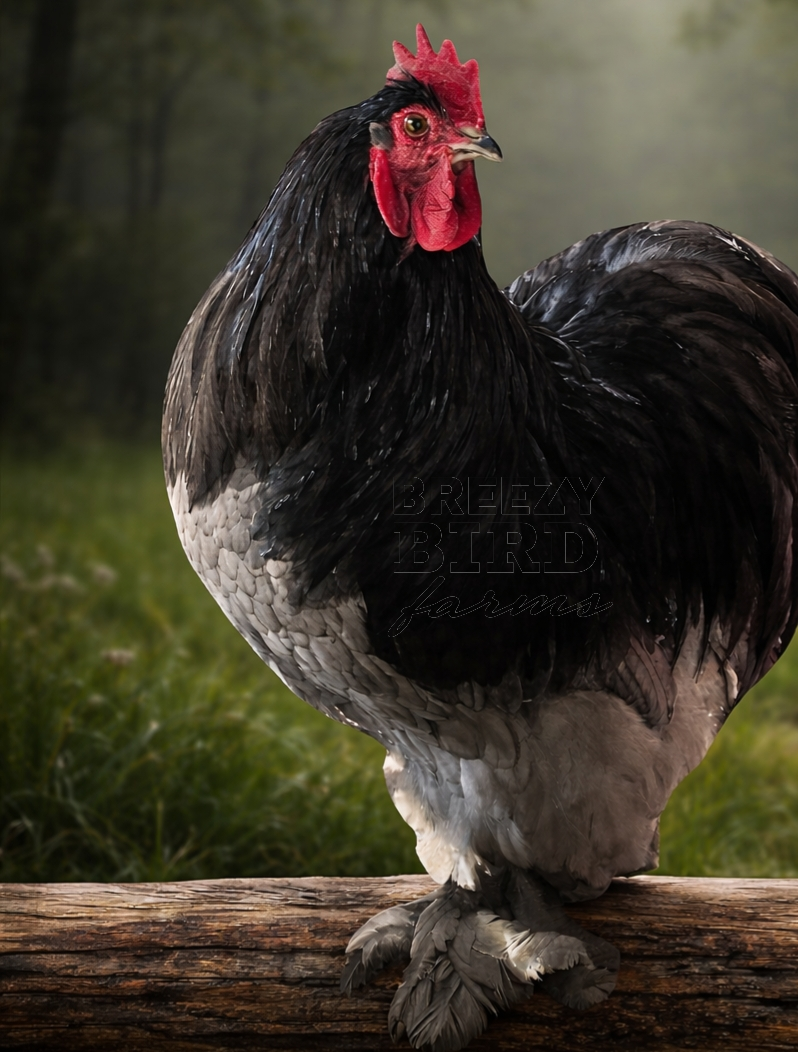
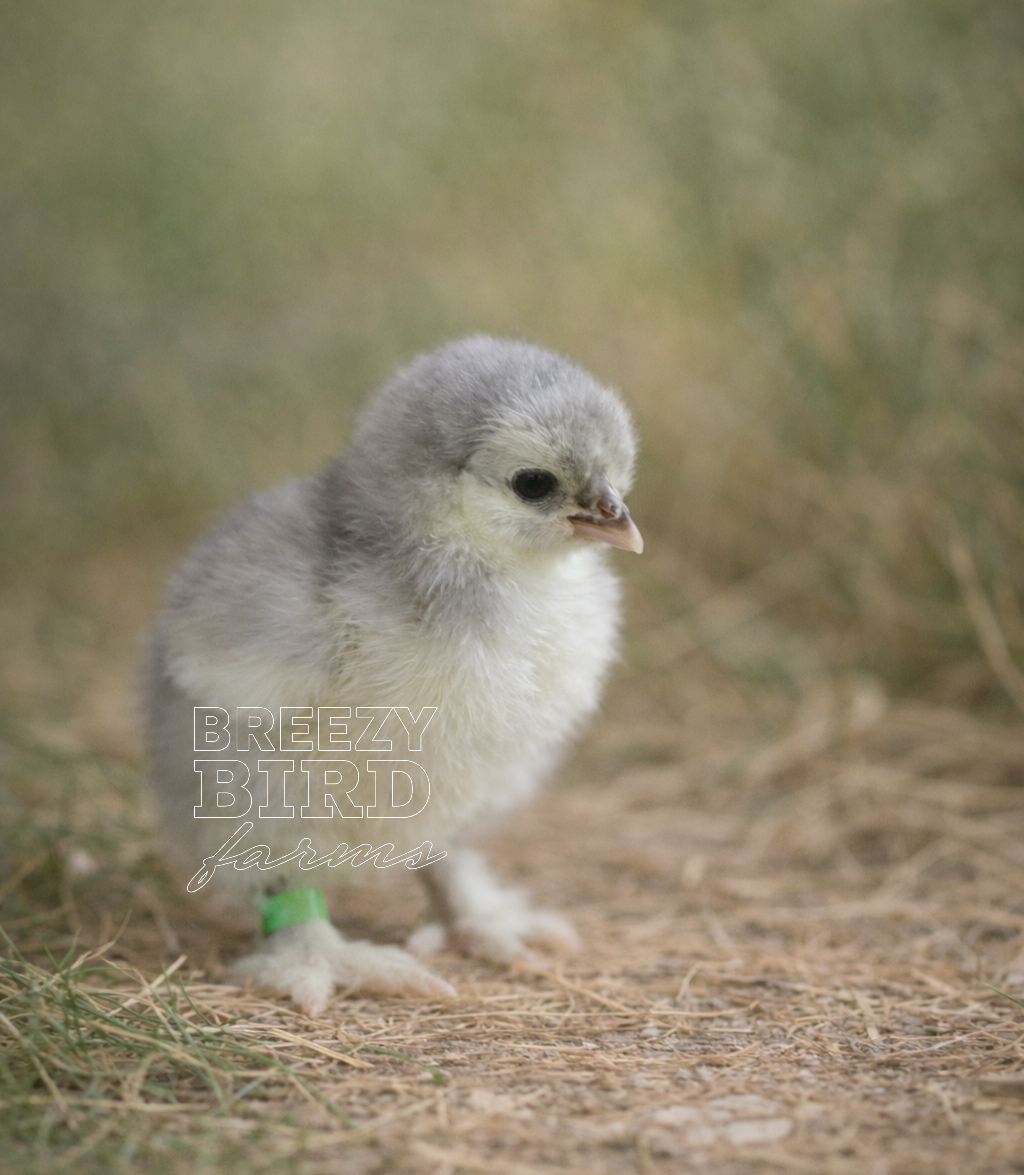
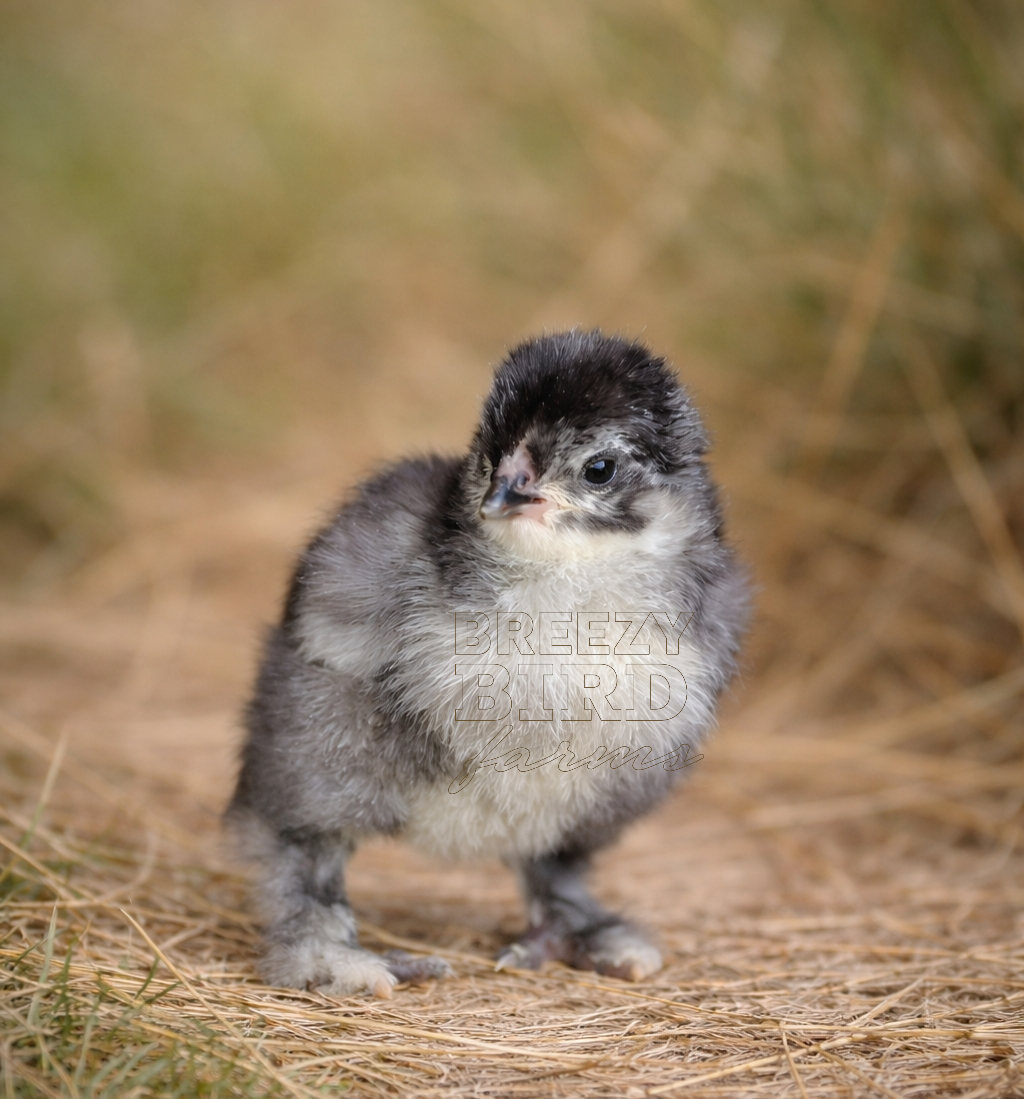
What to expect
“The Cochin reminds us that some of the most memorable birds are valued not for speed or production, but for presence, history and character.”
Breezy Bird Farms · Heritage chickensExplore current store availability, visit the breed library, or use the farm's resources as you prepare for incubation.
Breed descriptions are educational and reflect typical Cochin characteristics, not a guarantee about an individual bird. Eggshell colour, parentage, feather colour, laying rates, fertility, hatch results and seasonal availability vary. For current offerings and purchase terms, consult the store listing and farm policies.
Reference: The Brahma and Cochin Club of Australia — poultry colour genetics. Photographs: Breezy Bird Farms' published Cochin profile.