
Ridley Bronze Turkey
A Living Legacy of the Canadian Prairies
Few heritage poultry strains have a story so closely tied to Canadian agricultural history. Developed in Saskatchewan and carried forward through generations of dedicated breeders, the Ridley Bronze represents a remarkable chapter in Canada's rural heritage.
The Ridley Bronze Story
Explore the history and distinctive qualities of Canada's prairie-developed heritage turkey strain. Each subject opens separately using the plus sign.
History & Canadian Heritage
The story of the Ridley Bronze Turkey begins on the Canadian Prairies, where farmers and poultry breeders were developing practical livestock suited to Saskatchewan's challenging agricultural conditions. Its history is particularly associated with John H. Richardson of Saltcoats, Saskatchewan, whose breeding work helped establish the foundation of this uniquely Canadian strain of the Standard Bronze turkey.
Richardson began keeping turkeys in the late 1930s. According to historical accounts preserved by the Saskatchewan poultry industry, his early flock expanded substantially through the efforts of Richardson and his wife, Violet. At a time when turkey hatcheries were relatively uncommon, the couple experimented with incubation, feeding methods and the selection of breeding stock.
In 1945, Richardson opened a licensed hatchery in Saltcoats devoted specifically to turkeys. He collected promising breeding birds from existing flocks and pursued a consistent combination of useful size, natural reproduction, vigour and an even temperament. His work took place during an important period of growth for Saskatchewan's turkey industry.
The Richardson operation became influential well beyond the immediate Saltcoats district. Eggs and breeding birds helped establish flocks on other Prairie farms, and Richardson's strain was valued for its usefulness in outdoor production. The Saskatchewan Poultry Council records that the hatchery's peak production in 1958 reached approximately 72,000 poults. Richardson also received recognition for his poultry at major agricultural exhibitions.
The next important chapter involved the Ridley family. Maree Ridley Willis and her husband, Fred Willis, established a turkey operation near Saltcoats in the late 1940s. Maree's brother, George Ridley, subsequently developed a breeding flock near Leslie, Saskatchewan, during the 1950s. The family continued maintaining and raising descendants of the Richardson strain over several decades.
Family recollections describe these turkeys as part of an extensive regional poultry enterprise. Birds were raised on the range, breeding eggs were collected during Saskatchewan's cold spring weather, and stock was distributed to other farms. The line was also associated with the marketing name “Granny's Turkeys.” This history reflects not only the birds themselves but the people whose work sustained the strain.
During the late 1970s and early 1980s, the University of Saskatchewan acquired breeding stock from George Ridley's operation. University interest helped preserve the strain when changes in commercial poultry production were making traditional turkey populations increasingly uncommon. The designation Ridley Bronze became associated with the university-maintained birds, reflecting the source of the breeding flock.
By approximately 1981, the original Ridley family turkey operations had ceased. The university flock and a limited number of private breeders therefore became especially important to the strain's survival.
Another turning point occurred in 2008, when the University of Saskatchewan's turkey breeding program was discontinued. Birds from the university flock were dispersed among private breeders across Canada. The intention was to keep the bloodlines alive, but dispersal also created challenges for maintaining a small, scattered population.
Subsequent conservation surveys illustrated how vulnerable the strain had become. A 2010 survey identified approximately 90 breeding females. In 2012, the reported number had increased to around 225 females. A further survey in 2015 recorded approximately 250 breeding females among about 30 active breeders. These are historical survey figures, not an estimate of today's population.
Canadian conservation efforts continue to draw attention to the strain's importance. Some modern initiatives also use the broader name Canadian Bronze Turkey when discussing the Richardson and Ridley lineage. The name Ridley Bronze remains closely connected to the family, the university flock and the preservation efforts that followed.
What makes this turkey historically significant is not simply its magnificent bronze feathering. It is the survival of a particular Canadian-developed agricultural bloodline through changing production methods, university research, and the commitment of small-scale conservation breeders. Its history belongs to Saskatchewan and to Canada's wider heritage livestock story.
Physical Characteristics & Plumage
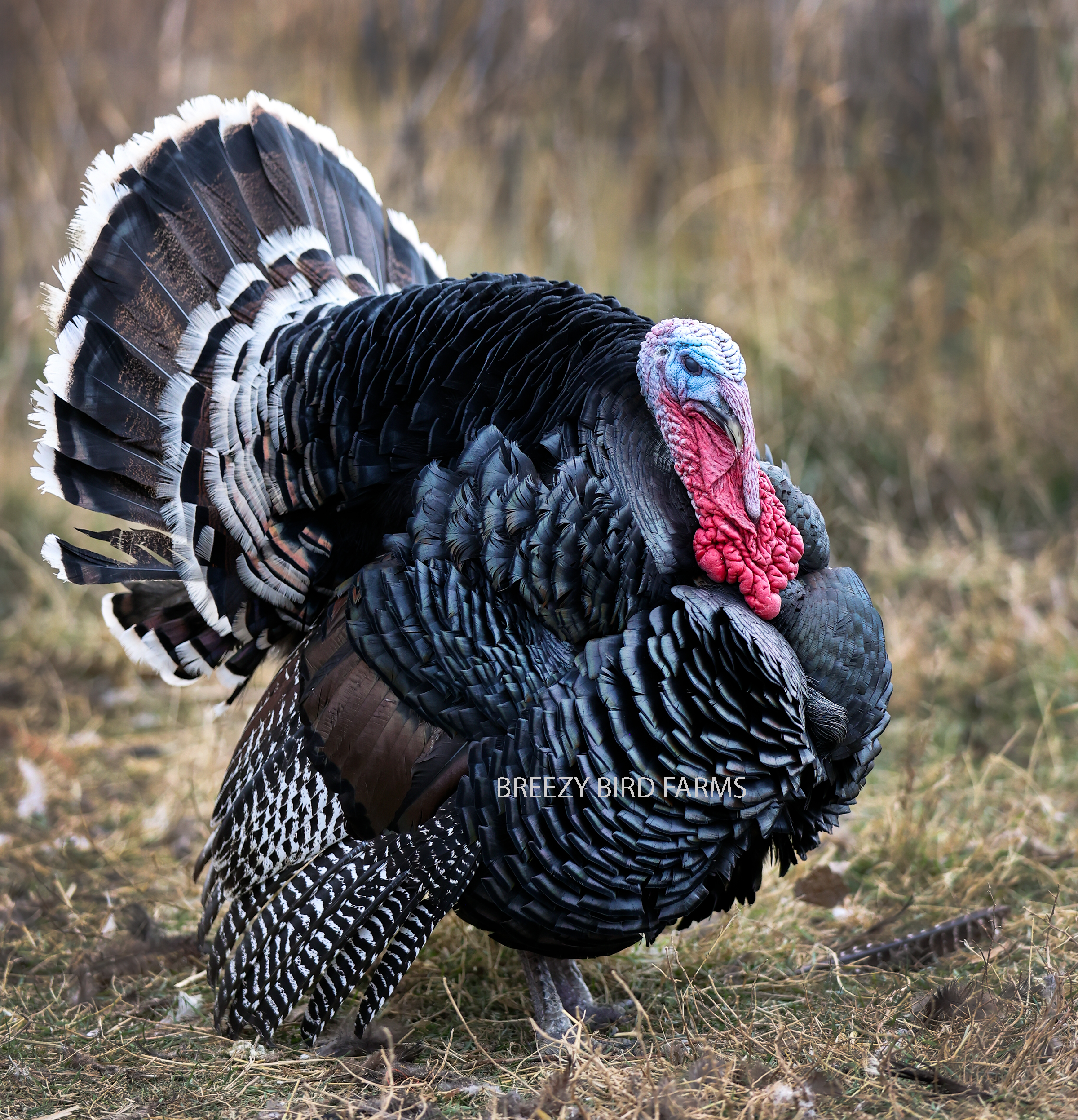
The Ridley Bronze is a traditional bronze-feathered turkey descended from Standard Bronze stock. Mature birds display striking combinations of dark brown, black, bronze, copper and greenish iridescence. Sunlight can reveal an extraordinary metallic sheen across the body and wing feathers.
Adult toms are especially impressive when displaying. They spread their broad tails into a fan, lower their wings, puff their body feathers and develop prominent colouring in the head and neck. Their snood and wattles change appearance with excitement and display.
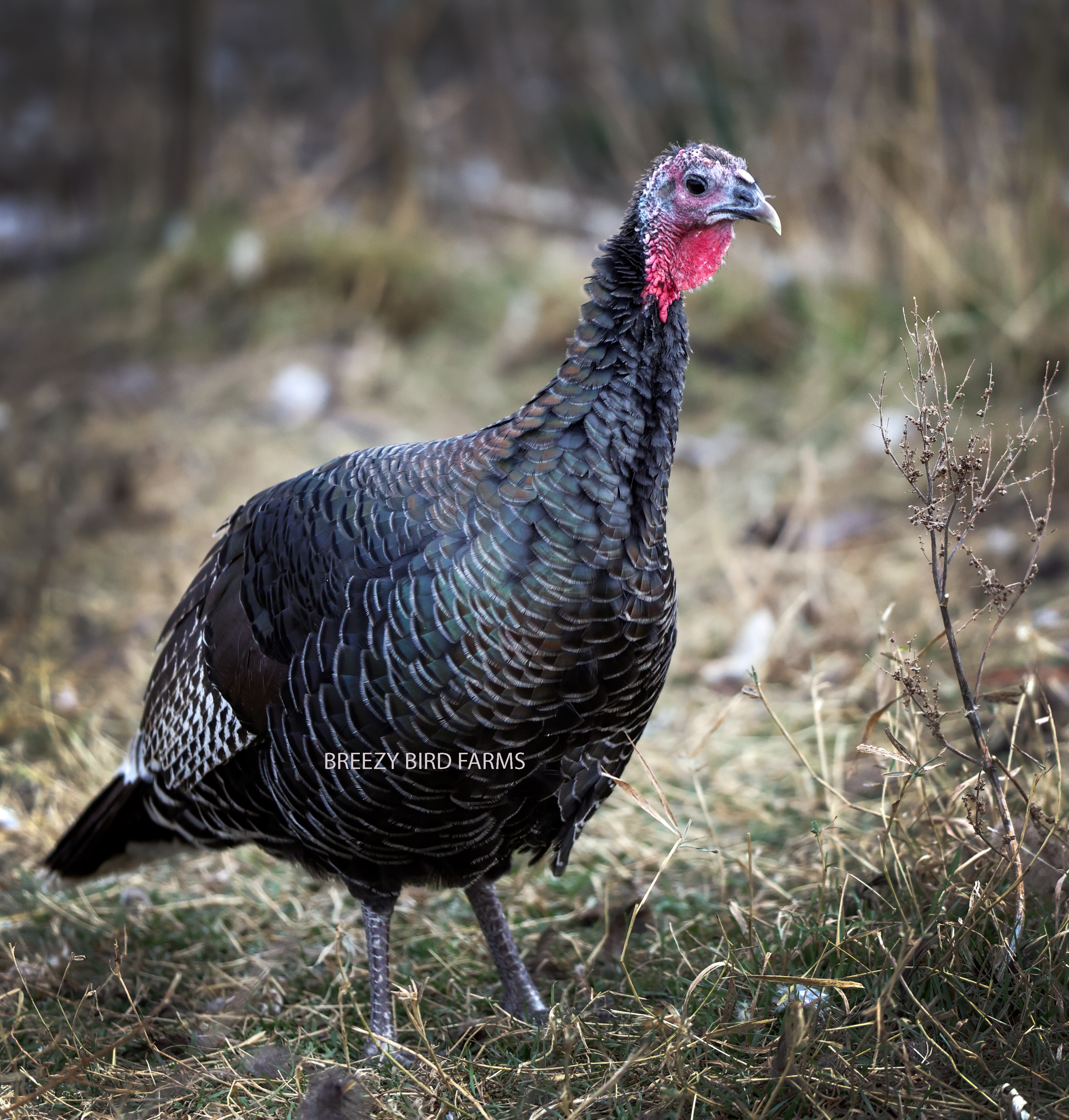
Hens are generally smaller and less extravagantly ornamented, but retain the richly patterned bronze plumage characteristic of the strain. The contrasting tail bands and finely marked wing feathers are particularly beautiful.
Individual size and feather development depend on age, bloodline, sex, health and management. A bronze appearance alone cannot distinguish a documented Ridley lineage from every other bronze-coloured turkey.
Temperament, Intelligence & Behaviour
Ridley Bronze Turkeys are frequently described by keepers as curious, observant and often sociable. Many individuals become familiar with regular routines and recognize people who care for them. Their behaviour makes them particularly engaging birds to watch.
Turkeys communicate through numerous vocalizations and body movements. Toms may gobble, strut and display to establish position or attract hens. Softer calls, changes in posture and group behaviour form part of their daily social communication.
As active foragers, heritage turkeys explore their surroundings, investigate unfamiliar objects and use available outdoor space when conditions are safe. They benefit from appropriate room, enrichment and predictable management.
Temperament should never be treated as a guarantee. Breeding toms can become territorial or aggressive, particularly during the reproductive season. Large turkeys must always be handled with attention to their strength, individual behaviour and the safety of both birds and people.
Eggs, Natural Reproduction & Poults
An important characteristic of the Ridley Bronze heritage strain is its capacity for natural reproduction. Unlike modern, heavily broad-breasted commercial turkey strains that commonly depend on artificial insemination, heritage-bodied turkeys can generally reproduce through natural mating.
Turkey hens usually produce eggs seasonally, particularly as daylight increases in spring. Their eggs are noticeably larger than typical chicken eggs, with cream to lightly tan shells that may show fine speckling. Shell colour and markings can vary.
The typical incubation period for domestic turkey eggs is approximately 28 days, although individual hatches do not always occur at precisely the same moment. Correct incubation conditions, egg handling, storage, breeder nutrition and fertility all affect the outcome.
Newly hatched turkeys are called poults. They require appropriate brooder warmth, feed, water, dry footing and close observation during early development. Young poults are more vulnerable than their mature appearance might eventually suggest.
Breezy Bird Farms offers hatching eggs, subject to seasonal availability. As with all fertile eggs, development and hatch results remain biological outcomes rather than guarantees.
Bronze Colour & Recessive White Genetics
The familiar bronze plumage of heritage turkeys results from inherited combinations of feather pigmentation and patterning. The rich metallic appearance of mature birds is particularly noticeable on the body and wings.
Turkey colour genetics also include recessive white factors. When both parents contribute the appropriate recessive allele, a white-feathered offspring may develop even though its parents display darker plumage.
At Breezy Bird Farms, recessive white has been observed in the Ridley Bronze breeding stock. Such offspring represent an inherited plumage outcome, not a separately named breed offered by the farm.
Because a feather colour cannot independently establish a bird's complete ancestry, responsible bloodline management relies on more than appearance alone. Conservation breeders may also apply different criteria when assessing historical lineage and colour variation.
Manitoba Hardiness & Flock Management
The Ridley Bronze was developed in a Prairie farming environment, making its Saskatchewan history especially meaningful to poultry keepers in Manitoba. Historical accounts describe active, free-ranging birds raised under conditions that required sound physical development and practical hardiness.
Heritage should not be mistaken for immunity to severe weather. Turkeys require dry, well-ventilated shelter, protection from wind and precipitation, unfrozen drinking water and adequate nutrition throughout winter.
Because these are substantial birds, accommodation should provide sufficient space, suitable roosting arrangements, safe footing and reliable predator protection. Wet conditions and poorly maintained bedding increase the risk of health problems.
The health of breeding birds and the quality of their environment directly influence the eggs they produce. Good sanitation, careful flock observation and practical biosecurity remain important in every season.
At Breezy Bird Farms, no live birds are brought into the established operation. New bloodlines are introduced through hatching eggs, with appropriate quarantine practices for resulting birds.
Ridley Bronze Turkeys at the Farm
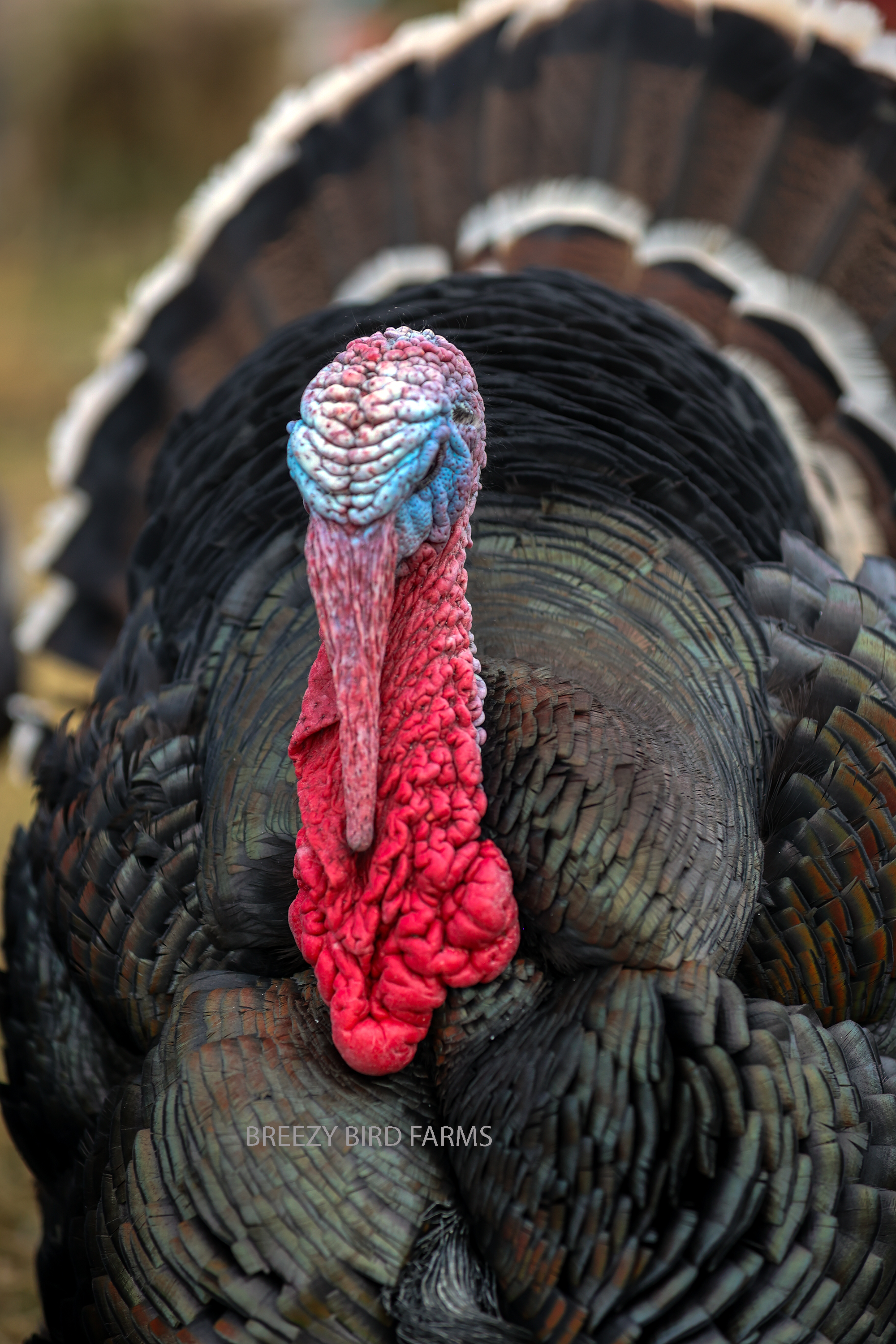
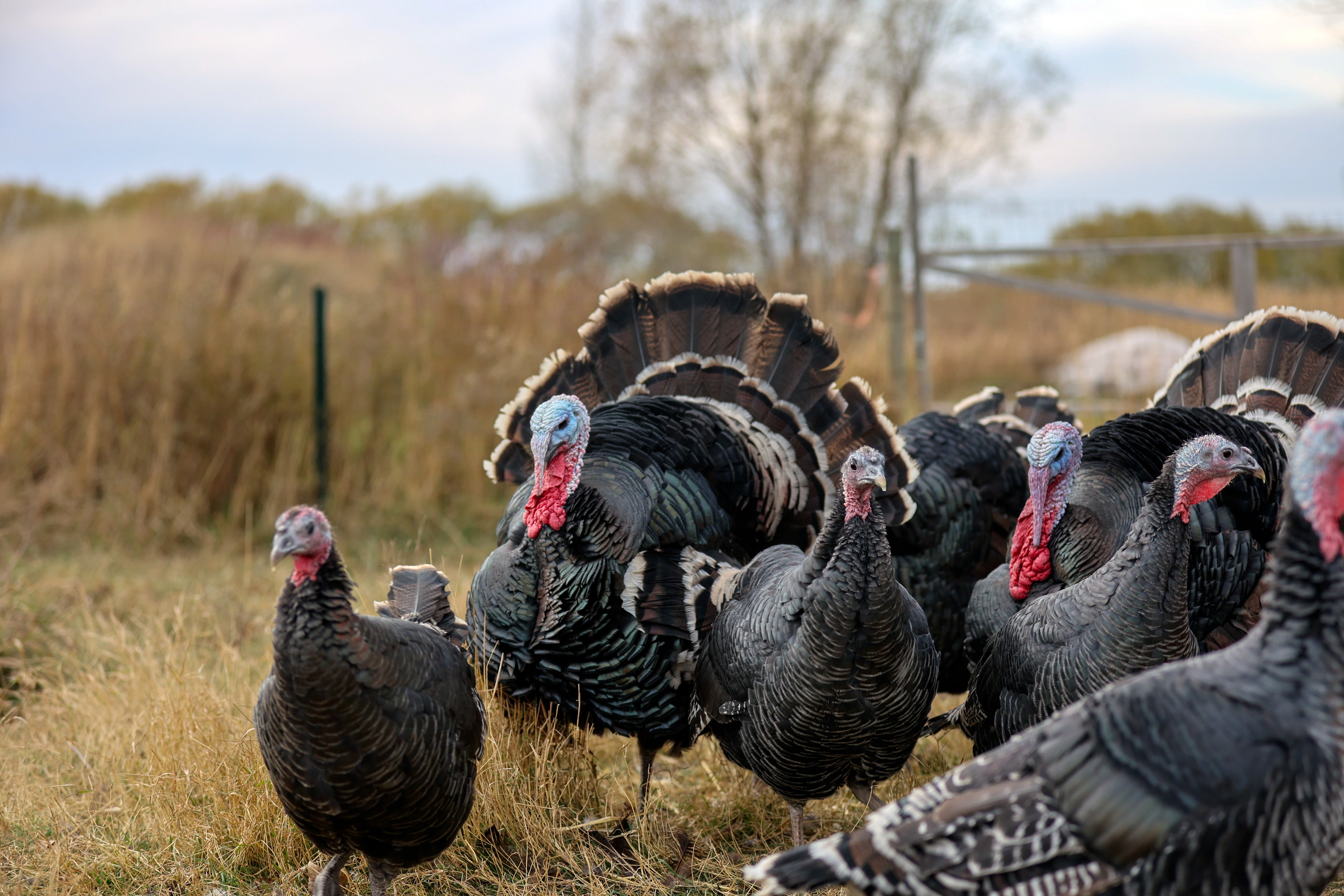
From the intricate iridescence of a mature tom to the elegance of a bronze hen and the unmistakable spectacle of the flock, these photographs capture the natural beauty of the Ridley Bronze.
Historical conservation figures refer to their stated survey years and are not current population estimates. Breed information describes general characteristics rather than guarantees for individual birds, egg fertility or hatch results. Hatching egg availability changes seasonally.