Impressive size
A broad, deep body and dignified stance give Brahmas their unmistakable silhouette. They mature more slowly than commercial strains.

Breezy Bird Farms · Heritage chickens
Gentle giants. Extraordinary presence.
One of the great historic heavy breeds: majestic, feather-legged birds with a calm reputation and a fascinating range of plumage. Discover the Brahma selections raised at Breezy Bird Farms in Manitoba.
 Original photograph · Breezy Bird Farms flock
A remarkable heritage breed
Brahmas became prominent in nineteenth-century North America after large, feather-legged birds of Asian ancestry were imported and further developed. Their broad frame, distinctive pea comb and heavily feathered shanks made them easy to recognize. The breed was valued as a substantial table bird before modern commercial strains took over, while remaining popular with poultry breeders for its presence and traditional usefulness.
A broad, deep body and dignified stance give Brahmas their unmistakable silhouette. They mature more slowly than commercial strains.
Dense feathering and a low pea comb can help in cooler climates; clean, dry feet and protection from frostbite remain essential.
Often described as calm and approachable. Temperament still varies with each bird, its lineage and handling.
Currently represented at Breezy Bird Farms
These are the colour selections listed in the farm's breeding program—not a generic list of every Brahma variety. The egg markings shown are Breezy Bird Farms identification codes, not universal breed codes. Availability may change through the season.
A captivating range from deep black to slate blue and pale splash. This colour family reflects the inheritance of the blue dilution gene; actual chick colours depend on the parent birds and mating combinations.
Read the current store listing for the specific pen and colour expectations.
Warm lemon-gold tones and pale feathering lend this Brahma selection an especially graceful look. The pattern is prized for its soft contrast and distinctive appearance.
A specialty farm selection, not one of the three APA-standard large-fowl colours.
Combining warm buff colouring with blue-toned markings, Blue Buff offers a striking variation on the traditional Brahma look. As with other colour-project breeding, expression can vary between birds.
An additional Breezy Bird Farms breeding selection.
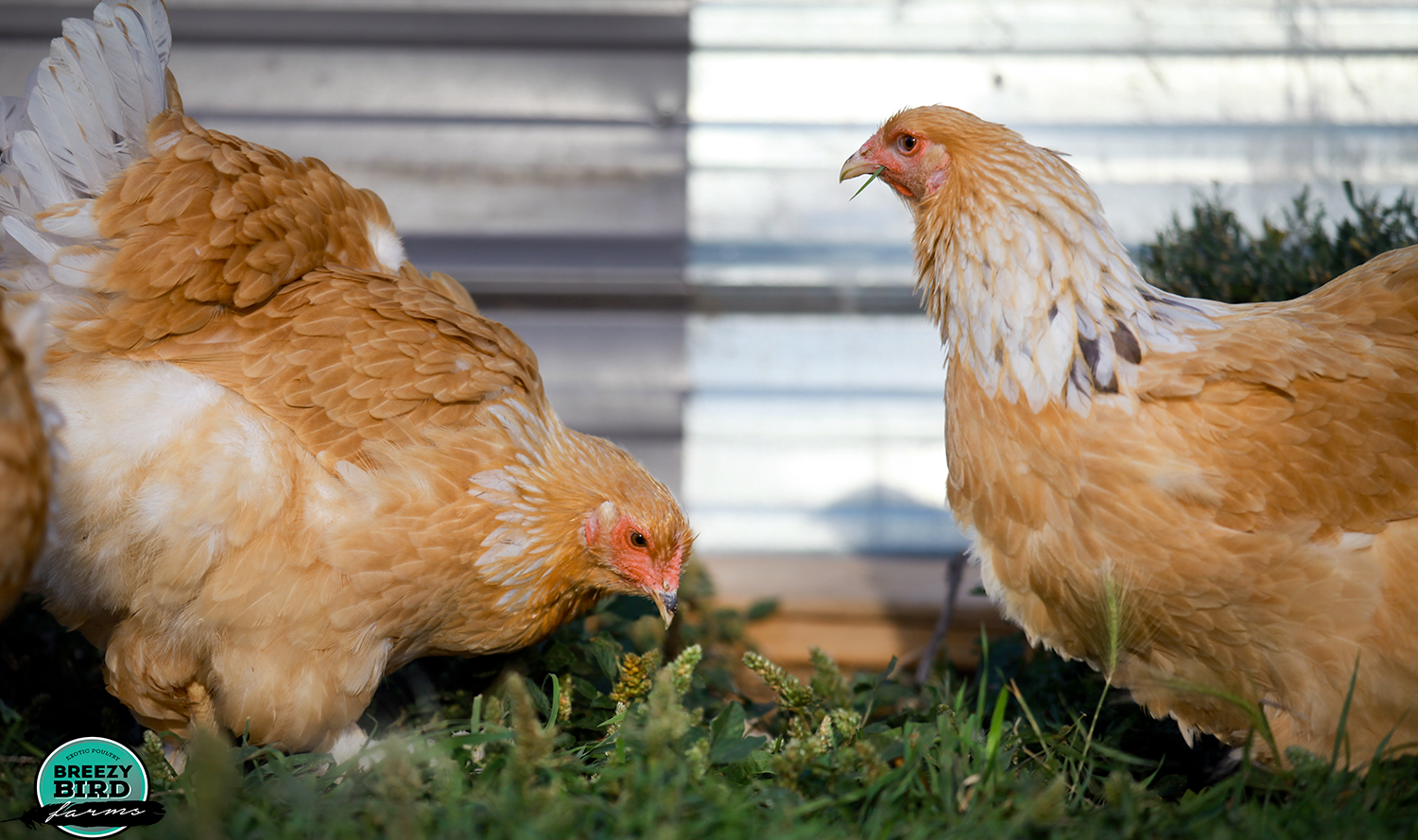
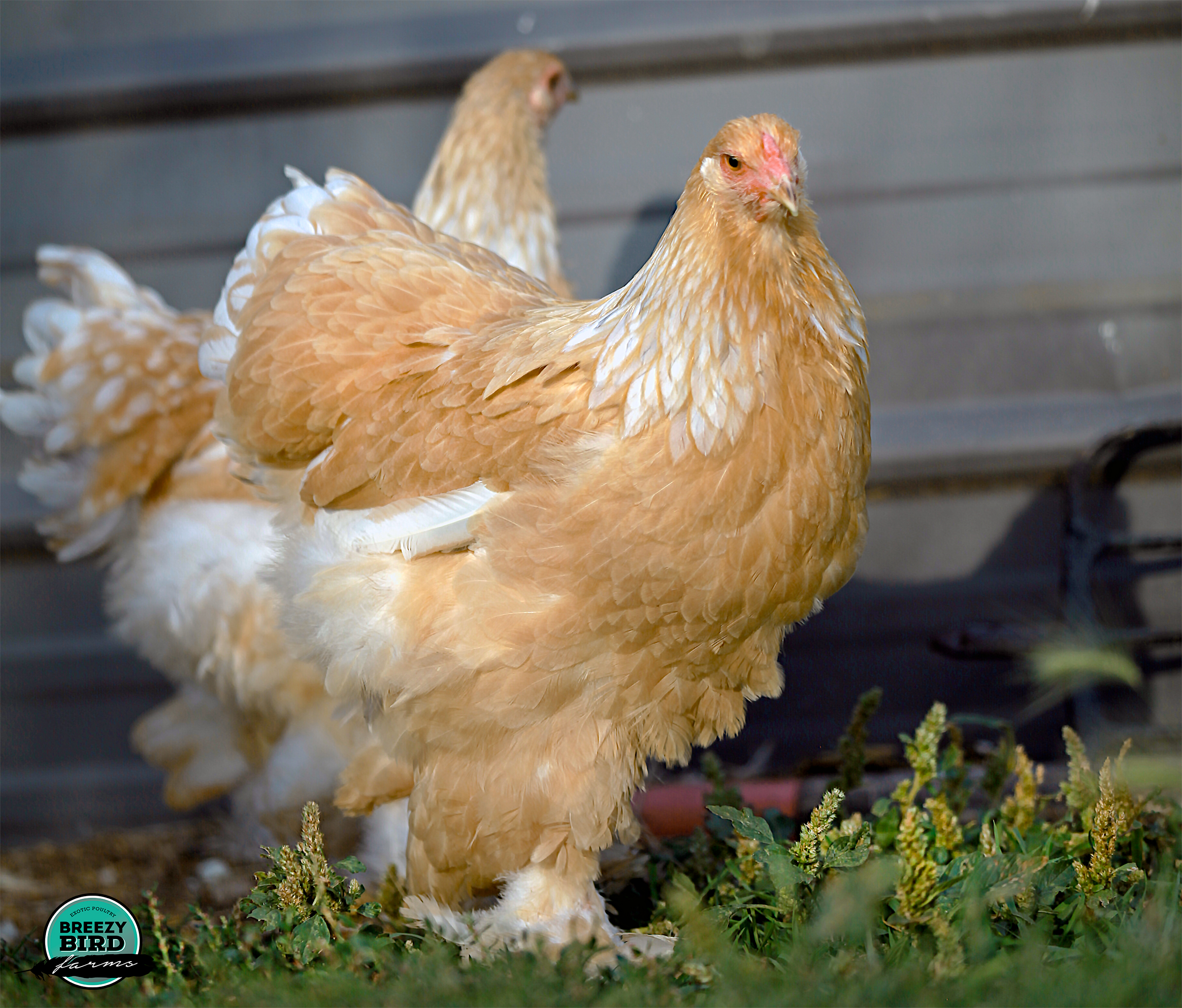
Photographs from the farm
Just a few favourites from the farm's own Brahma photographs. The shop may include additional images of specific breeding groups; this gallery is a glimpse of the birds rather than a duplicate product catalogue.
Explore the breed
Open any section for more detail about history, laying, colour inheritance and caring for these remarkable, feather-legged chickens.
Today's Brahma was refined in the United States in the mid-1800s using large Asian-origin poultry brought through maritime trade. It became famous for its substantial frame and was widely kept as a meat bird before the dominance of faster-growing commercial chickens.
The American Poultry Association admitted Light and Dark Brahmas in 1874, followed by Buff in 1924. Large stature and a calm nature helped keep the breed admired long after its early commercial role declined.
Brahma hens typically lay brown-shelled eggs, often medium to large. Historic breed descriptions commonly cite up to about 200 eggs annually under favourable management, but real output can vary significantly with age, lineage, season, weather, nutrition and individual birds.
Some Brahma hens become broody and can be attentive mothers. Their large size means nests and young chicks should be monitored carefully to reduce accidental crushing. Broodiness and laying capacity are individual traits, not guarantees.
In poultry, the commonly named blue dilution gene affects black pigment. Depending on the mating, chicks may be black, blue or splash. For example, a blue-to-blue mating often produces an approximate 1:2:1 distribution of black, blue and splash over many offspring; individual small hatches can differ greatly.
Those proportions do not automatically apply to all Blue/Black/Splash eggs sold from the farm. The actual breeding-pen combination matters. Blue colour inheritance is not the same as lavender (self-blue).
Mature standard Brahmas are among the heaviest chicken breeds, with a deep body, broad head, low pea comb and characteristic feathered shanks and toes. Historical standard weights vary by variety and sex, with mature males often around 11–12 lb and hens around 8.5–9.5 lb.
They are often quiet and gentle, though personalities differ. Their slower maturity and considerable size should be considered when designing suitable roosts, nesting areas, feed access and introductions to smaller birds.
Dense plumage and small pea combs can suit cooler climates, but Brahmas are not frostbite-proof. Feathers on the feet can hold moisture, snow or mud. Provide a dry, well-ventilated coop with suitable bedding and protection from direct drafts.
Check feet for ice buildup, injuries and soiling; ensure reliable unfrozen water, appropriate nutrition and adequate space. In hot weather, shade and ventilation are especially important for large, heavily feathered birds.
Breezy Bird Farms maintains Blue/Black/Splash, Lemon Pyle and Blue Buff Brahma breeding selections. Eggs are identified using the farm's own markings: B for Blue, LP for Lemon Pyle and B3 for Blue Buff. Stock and pen composition can change, so check the current Egg Emporium listing.
As with every shipped hatching egg, fertility is a biological snapshot and successful development depends on many factors, including handling, transit and incubation conditions. No individual egg or colour outcome can be promised.
“The beauty of keeping heritage poultry is seeing character, history and living genetics come together in the birds before you.”
Breezy Bird Farms · Preserving living bloodlinesThis page describes typical Brahma breed characteristics and Breezy Bird Farms breeding selections. Breed traits, egg size, seasonal laying, fertility, colour inheritance, availability and shipped-egg hatch results vary naturally. Please consult current product descriptions for the specific eggs offered.
References for breed history, features and standard colours: The Livestock Conservancy, Oklahoma State University, and American Brahma Club.