Distinctive individuality
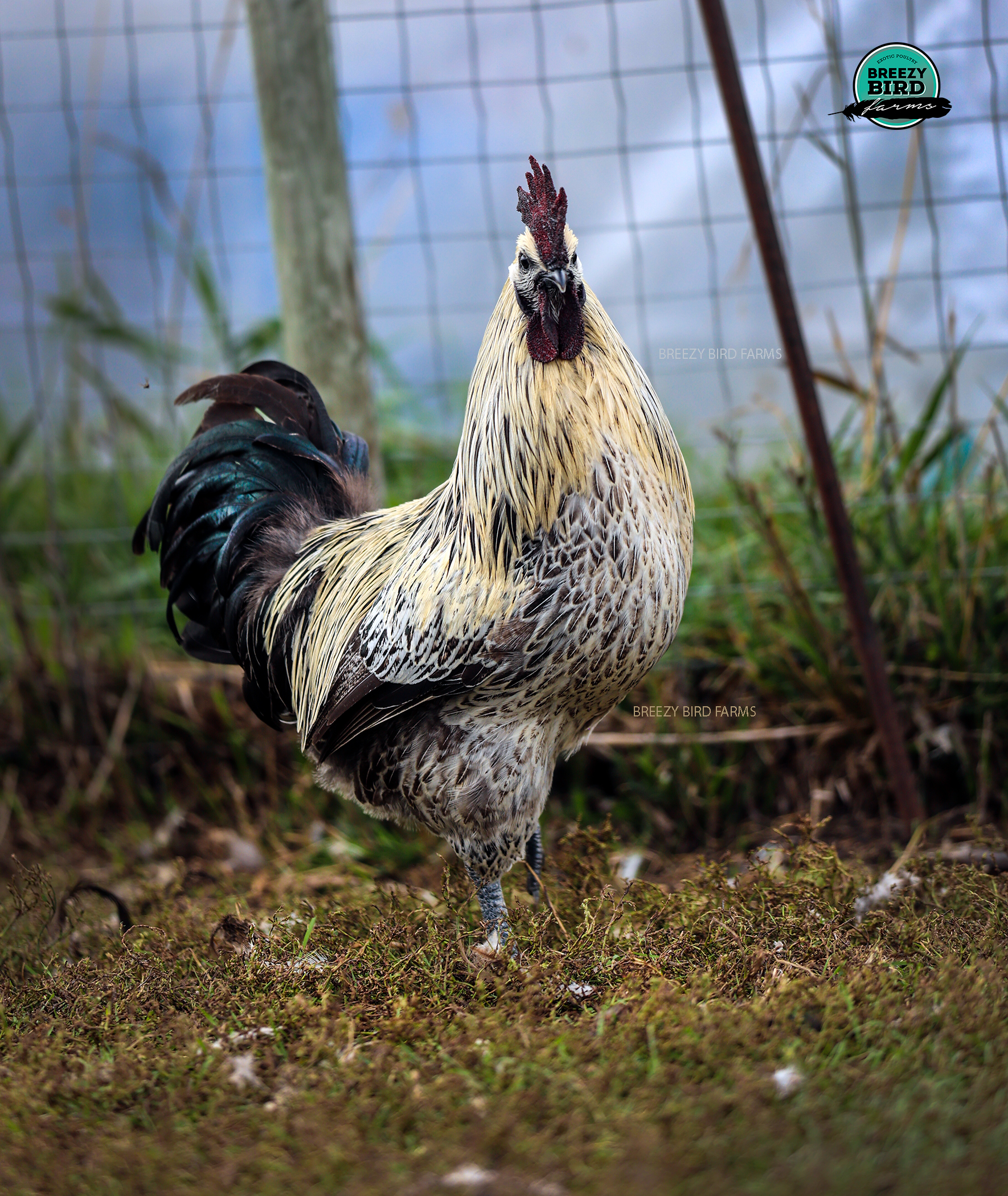
Every bird brings its own combination of feather markings, shape and colour. That visual diversity is a hallmark of many traditional landrace flocks.

Breezy Bird Farms · Heritage landrace poultry
Living heritage. Striking individuality.
Hmong chickens are a distinctive Southeast Asian landrace valued for their history, rich diversity and practicality. At Breezy Bird Farms in Manitoba, these captivating birds are part of a breeding program that celebrates natural variation rather than a single standardized appearance.
A living landrace tradition
The Hmong chicken is closely associated with Hmong communities in Southeast Asia, particularly the upland regions of northern Vietnam and neighbouring areas. Traditionally kept in family and village flocks, these birds have contributed both eggs and meat while retaining many locally adapted characteristics.
Unlike a modern exhibition breed, a landrace has no single rigid feather-colour blueprint. Birds can differ in colour, body shape, comb type and pigmentation while still belonging to a recognizable traditional population. This diversity is part of what makes Hmong chickens especially fascinating to preserve and raise.
Why landrace matters: These birds reflect generations of practical poultry keeping and inherited diversity. A Hmong flock is best appreciated for its overall heritage and character rather than judged against one uniform show-bird appearance.
Character & appearance
Hmong chickens can be lively, alert and capable foragers, with an individual presence that stands out in a mixed flock. In some lineages, fibromelanistic pigmentation contributes to dark skin, shanks and other tissues; expression varies. Their feathering may range from darker colours to richly patterned or pale birds, as shown in the farm photograph.
Every bird brings its own combination of feather markings, shape and colour. That visual diversity is a hallmark of many traditional landrace flocks.
These active, observant chickens are well suited to attentive farm and backyard flock keeping, where they can express their natural curiosity and behaviour.
Hens produce attractive light-coloured eggs, commonly on the small-to-medium side. Egg size and laying patterns differ among birds and seasons.
About their eggs
Hmong hens commonly lay small to medium-sized eggs with light-coloured shells, often cream to pale tan. That size is a normal characteristic of the landrace, not a sign that an egg is inferior. Actual size depends on the individual hen, her age and the time of year.
The Hmong flock at Breezy Bird Farms uses the egg identification code HM. This is the farm's own marking system, helping customers identify what they received; it is not an international breed code.
Typical shell: cream to light tan, sometimes with slight differences in finish and tone.
Typical size: small to medium; variation among hens and through the laying season is natural.
Identification: look for HM on marked Hmong hatching eggs from Breezy Bird Farms.
Raised through Manitoba's seasons
Breezy Bird Farms has direct experience raising Hmong chickens through Manitoba winters. Their adaptability in these conditions was even highlighted in a published Backyard Poultry feature about landrace fowl and the farm's breeding work.
As with the other poultry kept here, thoughtful housing, dry shelter, clean water and seasonal management are part of raising healthy birds through changing weather. The farm's own experience demonstrates the place Hmong chickens can have in a northern flock.
Featured in Backyard Poultry: The article “Landrace Fowl” discusses Hmong chickens and the Manitoba farm experience behind their cold-weather adaptability.
“The beauty of a landrace lives in its diversity, its history and the generations still ahead.”
Breezy Bird Farms · Preserving living bloodlinesExplore the breed
Explore current offerings, return to the Breeds Library, or use the Resource Centre to learn more about egg identification and hatching.
This profile describes the Hmong landrace and the Breezy Bird Farms experience with it. Individual appearance, laying, egg size, seasonal production, fertility, hatch results and current availability naturally vary. Photography © Breezy Bird Farms.
Learn more: Research on Vietnamese Hmong chickens · Backyard Poultry: Landrace Fowl